Reviewed by | Dr. Clare Bertucio MD
If you’re in your 40s, 50s, or beyond and are noticing dryness, irritation, or sensitivity, you’re not alone. Hormonal changes during perimenopause and menopause can affect the tissues of both the vagina and the vulva, and many women begin searching for the best vulva moisturizer to restore comfort.
With so many products labeled “intimate,” “feminine,” or “natural,” how do you know which vaginal balm is actually safe?
Let’s break down what happens to vulvar and vaginal tissue during menopause, what to look for in a safe balm, and what ingredients to avoid.
First, Let’s Be Clear: Vagina vs. Vulva
Before choosing a product, it’s important to understand the difference between the vagina and the vulva. The vagina is the internal canal and is self-cleaning, maintaining its own pH and microbial balance.
The vulva refers to the external genital skin, including the labia and surrounding tissue. Unlike the vagina, the vulva is external skin and can become dry, irritated, or sensitive, especially as estrogen levels decline.
When women search for a “vaginal balm,” what they often need is a vulva moisturizer designed for external use. Some products are formulated as both vaginal and vulvar moisturizers, offering internal and external support without disrupting the vagina’s natural balance.
Why Does Menopause Cause Dryness?
Estrogen helps maintain thickness, elasticity, and natural lubrication in vaginal and vulvar tissues.
As estrogen levels decline or fluctuate during perimenopause and menopause, tissues may become:
- Thinner
- Less elastic
- Drier
- More sensitive
This can lead to:
- External itching or irritation
- A feeling of tightness
- Discomfort during intimacy
- Increased sensitivity to soaps or fabrics
These changes are sometimes referred to clinically as genitourinary syndrome of menopause (GSM) or vaginal atrophy.
What Makes a Vaginal Balm “Safe”?
The safest vulva moisturizer for menopausal women is one that:
- Is designed specifically for the vulva
- Is fragrance-free
- Avoids harsh preservatives
- Does not disrupt the vaginal microbiome
- Supports the skin barrier
Because the vulva is delicate skin, products that work elsewhere on the body may not be appropriate here.
Fragrance-Free Is Essential
Fragrance is one of the most common irritants in vulvar care products.
Even products labeled “natural” or “botanical” may contain essential oils that can irritate sensitive skin. During menopause, vulvar tissue becomes thinner and more reactive, making it more vulnerable to irritation.
Fragrance can:
- Disrupt the skin barrier
- Increase inflammation
- Trigger itching or burning
- Contribute to odor by upsetting the balance of bacteria
It’s important to remember: a healthy vagina doesn’t need fragrance. While your vagina may not smell, your vulva skin does sweat, and bacteria can have a natural scent, just like any other part of the body. If you notice a strong, unusual odor, that is often a reason to consult a healthcare provider.
The safest products are fragrance-free and formulated specifically for vulvar skin.
Avoid Harsh Preservatives and “Cooling” Ingredients
Some products marketed for “feminine freshness” contain menthol, alcohol, or strong botanical extracts and essential oils designed to create a cooling or tingling sensation. For menopausal vulvar tissue, these ingredients can worsen dryness and irritation rather than relieve it.
Look for:
- Minimal ingredient lists
- Gentle, barrier-supportive oils
- Dermatologist-tested formulations
Remember: natural does not automatically mean gentle.
Barrier Support Is Key
During menopause, decreased estrogen can weaken the skin barrier of the vulva.
A safe vulva moisturizer should help:
- Lock in moisture
- Reduce friction
- Protect against external irritants
Ingredients like natural oils and waxes can create a breathable protective layer that supports healing without disrupting the vaginal environment. Unlike lubricants, which are typically used during intimacy, a vaginal balm or vulva moisturizer is meant for daily or regular use to maintain comfort.
Is It Safe To Use a Balm Near the Vagina?
A common question is whether applying a balm to the vulva affects the vagina.
A properly formulated external balm should not disrupt the vaginal microbiome when used as directed. The vagina is self-cleaning and maintains its own pH balance. Applying a gentle, fragrance-free product to the external vulva does not change that internal environment.
However, douching or inserting fragranced products into the vagina can disrupt its natural balance and should be avoided.
When To See a Healthcare Provider
Dryness is common during menopause, but certain symptoms require medical evaluation.
See a provider if you experience:
- Persistent burning
- Pain with urination
- Bleeding not related to your menstrual cycle
- Strong or unusual vaginal odor
- Discharge changes
Topical moisturizers can support comfort, but they do not replace medical treatment when needed.
How VMAGIC® Fits Into Vulvar Care
For women looking for the best vulva moisturizer during menopause, products designed specifically for external use and free from fragrance are often preferred.
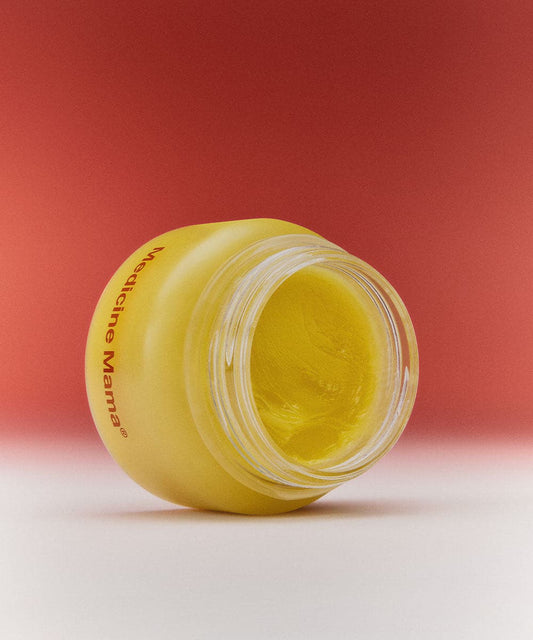
VMAGIC® is formulated for vulvar skin and is commonly used to support comfort during dryness and irritation. Because it is designed for external application, it does not interfere with the vagina’s self-cleaning function.
When choosing a balm, the goal is not to mask symptoms, but to support the skin barrier and maintain comfort during hormonal transitions.
Vaginal Balm vs. Vaginal Estrogen
It’s important to distinguish between moisturizers and prescription treatments. Vaginal estrogen therapy is often prescribed for moderate to severe symptoms of genitourinary syndrome of menopause (GSM). It works by restoring estrogen directly to the tissue.
HRT may not completely solve dryness issues. Some women find adding a moisturizer to their routine alongside their HRT therapy can be especially helpful for finding relief.
Choosing the Best Vulva Moisturizer for You
When selecting a product, ask:
- Is it fragrance-free?
- Is it labeled for external vulvar use?
- Does it have a short, transparent ingredient list?
- Is it free from unnecessary additives?
Comfort during menopause is not about covering up your body’s natural scent or altering your vaginal environment. It’s about supporting skin that has changed due to normal hormonal transitions.
The Bottom Line
The safest vaginal balm for menopausal women is one that is truly a vulva moisturizer: fragrance-free, barrier-supportive, and formulated specifically for external use.
As estrogen levels decline, vulvar skin becomes thinner and more sensitive. Choosing a gentle, well-formulated balm can help restore comfort without disrupting the vagina’s natural balance.
Menopause is a natural phase of life, but discomfort doesn’t have to be. With the right information and thoughtful care, you can support your body confidently through every stage.
Sources:
Menopause And Perimenopause | Harvard Health
Vaginal Atrophy | Causes, Symptoms, Diagnosis & Treatment
Estrogen Therapy | StatPearls | NCBI Bookshelf
Genitourinary Syndrome of Menopause | Johns Hopkins Medicine